

Current Projects and Funding Needs
Please see below further details of the current projects we are working on, and a few examples of Sri Lanka’s wide and varied funding needs. One of the most pressing funding needs at present is an urgent appeal for help following a triple cyclone in Sri Lanka.
If you are able, please consider donating or joining our support programme.
Recent Events and Ongoing Support
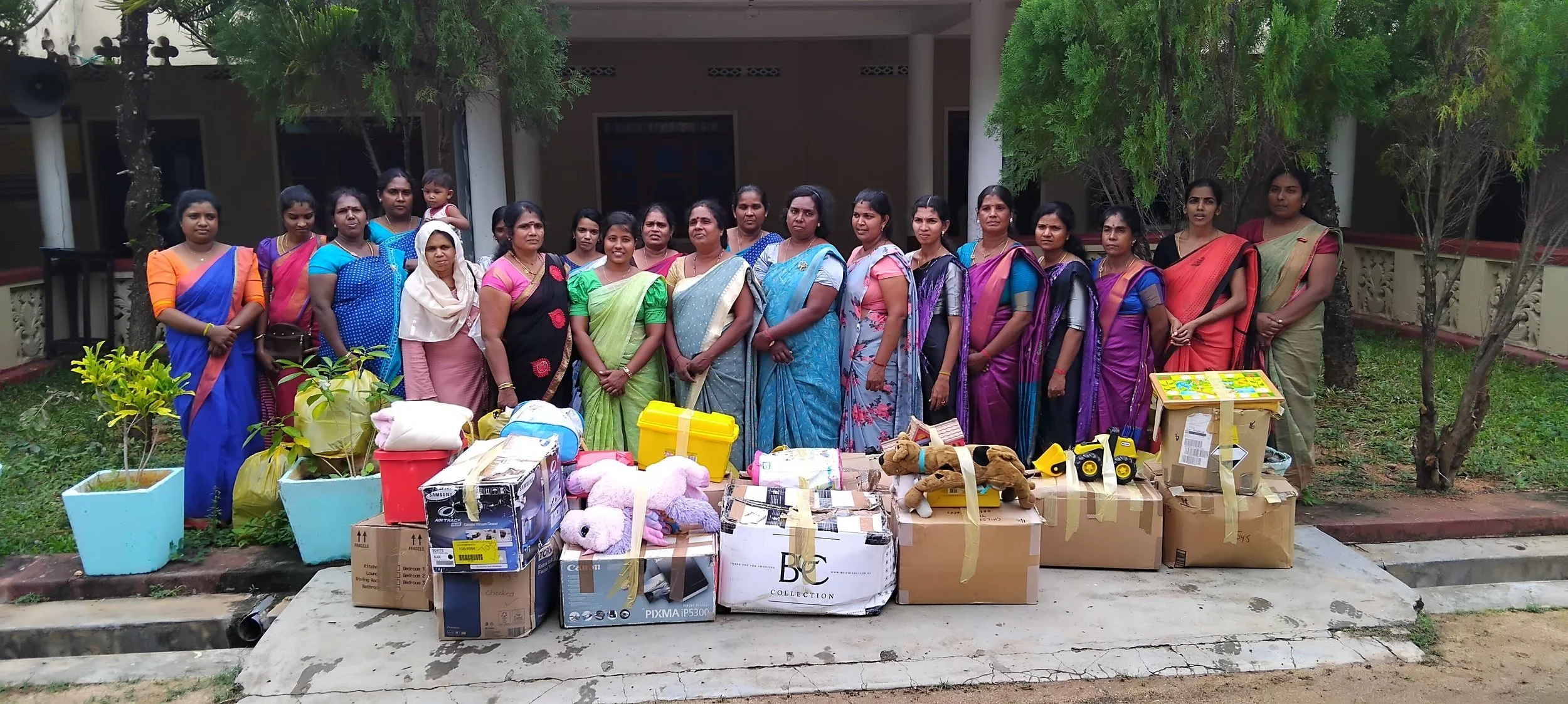
In March 2025, to celebrate International Women’s Day, 35 women from Thampalakamam visited Jaffna, the capital city of the Northern Province of Sri Lanka, bringing much joy and motivation.
In April 2025, a one-day youth gathering was held. Young people actively participated in the event, including games and teaching. Children were also taken on a day-long outdoor trip.
In May 2025, a two-day children’s and youth tour was organised with the help of supporters. 70 participants, including children, teachers and mothers enjoyed the trip. The first day was spent visiting Sigiriya Rock and a playground in Kurunegala. The following day was spent visiting an Elephant Sanctuary in Pinnawala, and a trip to Leisure World in Avissawella.
In November 2025 a meeting was held with local preschool teachers, with toys distributed for the children.
In High Forest, Central Sri Lanka, afternoon classes are conducted, with 20 children in regular attendance. They are taught subjects including Mathematics, Tamil, Sinhala, English and Poetry. These classes are open to children from all religions and backgrounds, and are especially helpful to those who are struggling academically.
Grace Preschool operates in the Thambalakamu region, serving over 20 children from Sinhala and Tamil backgrounds, supported by Care Sri Lanka.
Transport, Economy and Nutrition
Community and church events are often held in areas without regular transport, meaning long journeys on foot for those who wish to attend. The provision of transport is a priority to aid people in Sri Lanka, as it is also used for essential journeys to medical appointments. Two women supported by Care Sri Lanka recently underwent surgery. Transportation, care, and financial support were arranged and assistance was provided.
Due to natural disasters, nutritional food can be difficult to come by. Families in Sri Lanka are supported to develop small vegetable gardens, growing pumpkins, aubergines, and chillies, which provide sustenance to local communities.
Work is difficult to find in Sri Lanka. Natural disasters regularly destroy farms and plantations, removing local wage labour. Young people across the country are abandoning their studies in favour of finding jobs in cities such as Colombo, to allow them to support their families. The cost of many essentials, including educational equipment for children, transport, food, and medical care, are on the rise.
Care Sri Lanka provides medical and economic support to struggling families, regardless of religion or ethnicity.
Local Wildlife and the Climate
Sri Lanka is facing irregular seasonal changes, including heavy downpours, increasing the danger of landslides. These landslides can destroy homes and livelihoods, block traffic and prevent children from attending school. Those who live and work in the mountainous regions of Sri Lanka, are the most affected, especially those who rely on employment through tea plantations.
Cyclones and heavy rainfall are most frequent during the months of November and December. These can create heavy storms which prevent Sri Lankans from fishing, reduce the output of solar panels, and prevent food supplies from being obtained and distributed around the country.
Flooding has serious consequences for Sri Lankan people, including business and houses being flooded and families being displaced. Roads are also flooded, reducing the ability for workers to commute, creating financial hardship.
Contaminated water supplies also contribute to the spreading of diseases, such as dengue fever. In addition, strong and cold winds in the mountains have led to an increase in respiratory illnesses among the elderly, children, and pregnant women. The regions of Polannaruwa, Anurathapura and Kanthalai have been especially affected by this. There is also a lack of regular transport to hospitals.
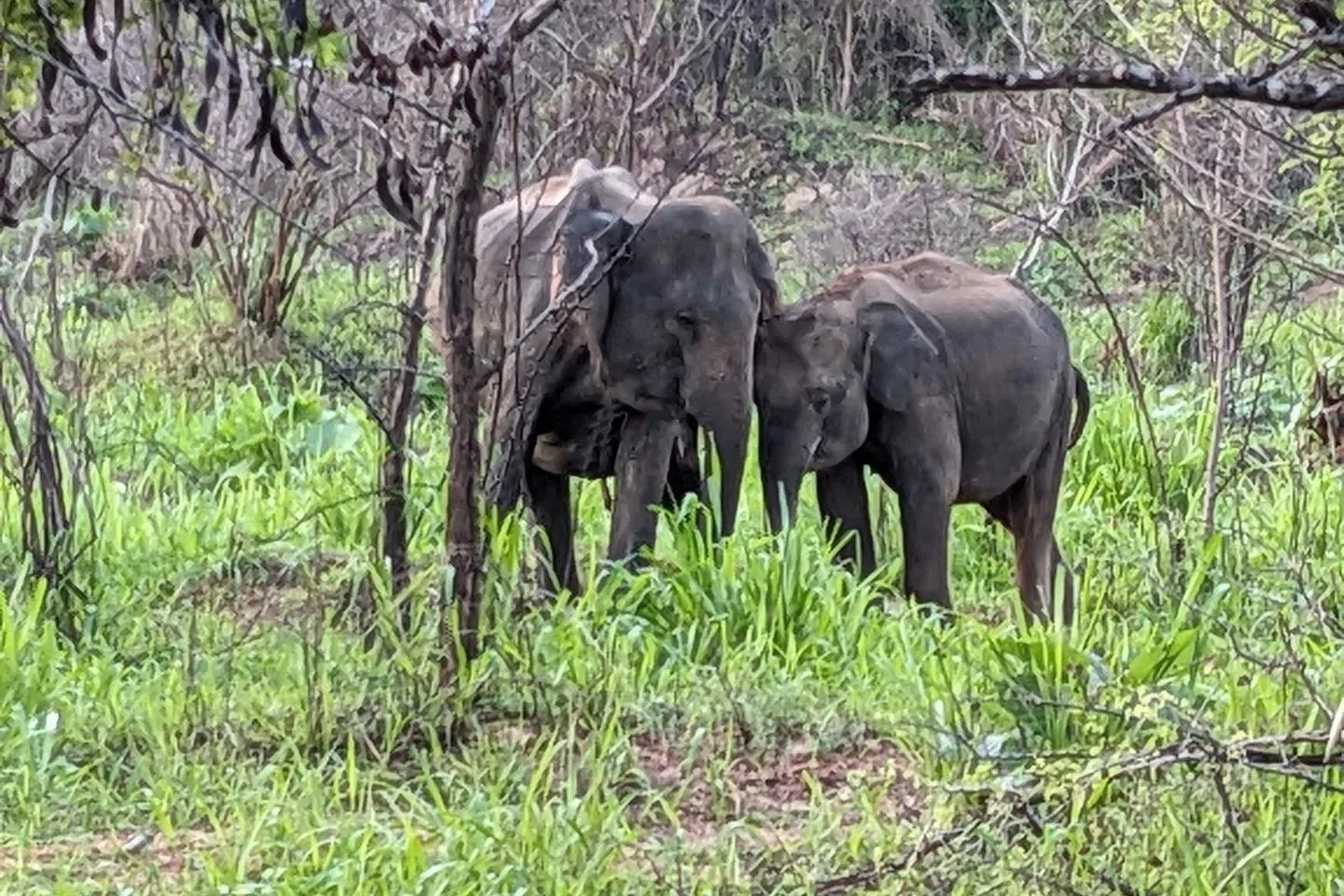
Wildlife continues to present a danger to the people of Sri Lanka. In particular, Velankulum, a village near a forested area, regularly experiences conflict with the local elephant population. In a recent tragic incident, a village officer lost his life in an elephant attack. Elephants enter villages like Velankulum, toppling fences and trees, and destroying farms and gardens, especially paddy fields. This has a devastating effect on local economies, as people lose access to nutritional food, livelihoods, and even safe spaces to live.
Sewing Centre
In October 2023, we set up a Sewing Centre near Trincomalee, in the North West region of Sri Lanka. This Sewing Centre has been a valuable resource in training and educating those in need.
Students are taught to sew, make and tailor clothing, mend, embroider, and even maintain sewing machines. Elders from the nearby Six Mile Post church visit on a weekly basis to monitor the students’ progress and send regular reports. The training is provided at no cost to the students, where normally they would have to arrange travel to a larger city, pay for any courses and materials, and organise access to a sewing machine.
During their training, those who attend the Sewing Centre are also able to earn a wage by charging for their mending services and selling the clothing they make. Students will also provide these services for free, for those who cannot afford to pay.
When training is complete, those who have completed the sewing course are free to go and set up their own businesses.